Command & Control · Tune · Log · Diagnose
Command & Control
Drive your vehicle's systems straight from the helm — cruise, fans, idle-up, boost maps, shift patterns — with real, validated bus messages, not guesswork.
Tune
Read, edit and flash ECU and TCM calibrations on the device — checksum-clean writes, shift and TCC tables, preset change-packages — no laptop or dealer tool required.
Log
Capture the full CAN bus and sensor telemetry to SD, then graph it on-screen or export it for later analysis.
Diagnose
Read, interpret and clear diagnostic trouble codes in seconds — across the modules on your bus.
Connected & up to date
With the Expander fitted, Wi-Fi over-the-air updates keep the firmware and calibration database current, delivered from the owner portal. The dash on its own is CAN-connected — no wireless of its own.
GM power, factory dash
Running a GM driveline in your Nissan Patrol S4+? Helm Commander drives the factory instrument cluster straight from the GM bus — speedo, tacho, temps and tell-tales stay live, with no dead gauges after the swap.
Battery & voltage watch
Keep an eye on your electrics. With a custom OS flash the dash reads system voltage straight off the GM CAN broadcast — no extra hardware — and with the Expander you get a hardware battery reading plus a second, independent aux voltage input: watch a house or second battery, ideal for dual-battery 4x4s and campers.
On the moment the screen is.
Helm Commander runs on a real-time processor — not a little computer that boots an operating system. No logo, no loading bar, no waiting: the instant it has power it's drawing gauges and talking to your CAN bus. Turn the key and it's already reading the engine.
The cheaper Raspberry-Pi-based dashes take the long way round — they boot a full Linux operating system every time you start the car. That's tens of seconds of black screens and boot logos before the first gauge moves, and a real risk of a corrupted SD card if the power drops without a clean shutdown. Helm Commander has nothing to boot and nothing to corrupt.
Quality where you'll see it.
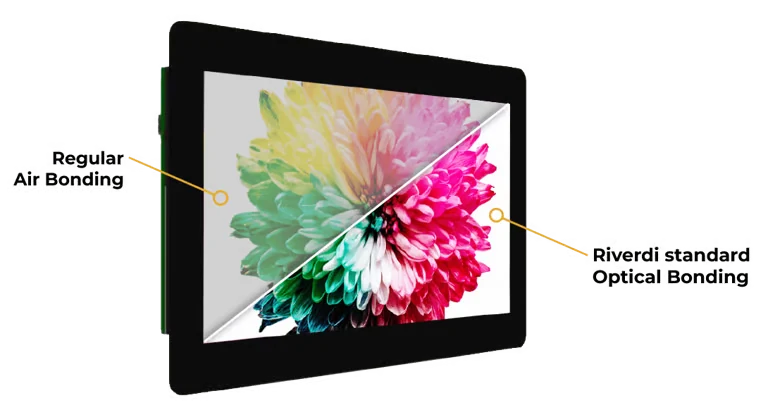
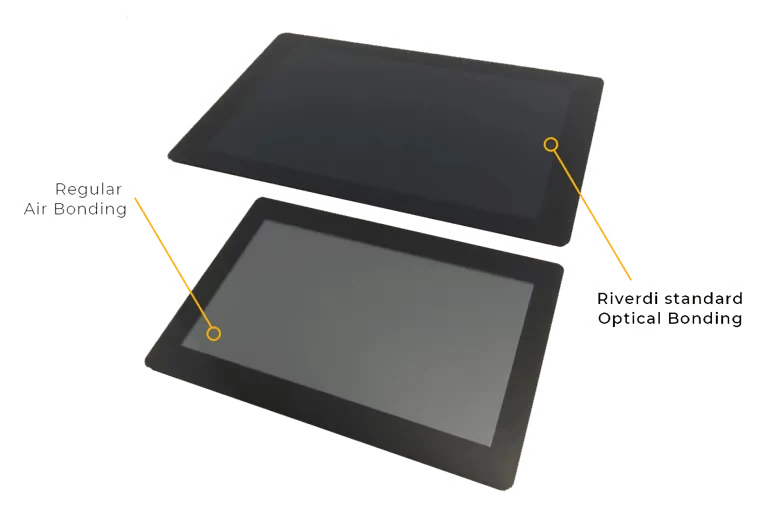
We could have fitted a cheaper panel — plenty do. Helm Commander uses a Riverdi display with the cover glass optically bonded to the panel: no air gap between you and the image. That's what gives deep, true blacks and vivid colour, kills the internal reflections that wash a screen out in sunlight, and makes the glass tougher with a more solid touch. It costs more — and it shows every time you glance at the dash.
It speaks your GM's language — not a diagnostic dialect.
Every module in a modern vehicle broadcasts what it knows, continuously, whether anything is listening or not. A plug-in scan tool ignores all of that and interrupts to ask one question at a time. Helm Commander reads the broadcast — and when it needs to act, it speaks as one of the vehicle's own modules.
Both directions are raw CAN: the Commander reads the broadcast, and commands with factory frames. Diagnostic requests appear only where there is no other way in — fault codes, idle control, calibration work — a handful of pages out of everything it does. Nothing it puts on your bus is traffic the bus was not built to carry, which is what lets it live there permanently.
One plug turns it into the whole system.
The dash does plenty on its own — but when a build needs more than the CAN bus carries, the Expander adds it. A plug-in board that reads your sensors, watches your switches, drives your relays and solenoids, and adds wheel-speed, a second vehicle network, even GPS — all behind proper automotive protection, with its own processor so the extra I/O never slows the dash down.
An optional upgrade. Add Expander Standard for the essentials — 8 sensor inputs, 21 switch inputs, 4 protected outputs, GPS and Wi-Fi — or Pro, which doubles the outputs to 8 and adds twin wheel-speed inputs, a 6-axis IMU and a third CAN bus. Fitted behind the display, specced with your dash. See the Expander →
Watch Helm Commander work